
Quality Marine Electrical Cable From EWCS Wire

When it comes to Marine Electrical Cable, knowing the differences between what makes wiring suitable for marine applications and terrestrial wire is crucial. The American Boat and Yacht Council (ABYC) has a set of standards in place for proper wire and cable construction and wiring guidelines to ensure all marine wiring is completed safely. If you need wires and cable for working in marine applications, the team here at Electric Wire and Cable Specialists (EWCS) can help you find a great deal on ABYC compliant marine wiring supplies.

EWCS Wire is an American manufacturer of the highest quality marine grade wire. We also offer many varieties of wire and cables for terrestrial applications ranging from aluminum building wire to heavy-duty welding cables. Next time your business needs a source for any wiring needs, let our team get you the wiring supplies you need shipped fast at a great price.
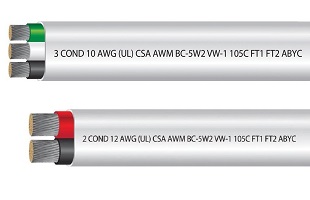

When it comes to boat cable, you need a lot of flexibility to cope with the constant movement boats have to deal with. Rigid cables, like the solid cored Romex used in homes, are too rigid to be installed in marine environments. With enough rocking, these cables will eventually work themselves loose or their insulation will split or strip. All of our marine wires and cable feature finely stranded conductors to ensure maximum flexibility.

We also used tinned copper to make the conductors for all of our marine wires and cables. While this is not a requirement from the AYBC, it is a safer option than raw copper. By plating the strands of copper with tin, the wiring becomes much less reactive while still being extremely conductive. If your conductors are exposed to the humid environment inside a boat, this layer of protection will keep them from quickly corroding.

The final layer of protection on our marine electrical cables is the insulation. The conditions in boats are not only wet but they can also contain gas, oil, and abrasive surfaces that can damage your wiring. We use extremely flexible insulation that resists acids, alkalis, gas, oil, and moisture to ensure that your cables will remain safe and secure.

We carry both single conductor boat wires in sizes ranging from 16 AWG to 4/0 AWG. Unlike wiring on land, you should never use wires with a gauge smaller than 16 AWG for marine applications. We also carry multiple conductor cables include two conductor cables in 16 AWG to 12 AWG and three-conductor cables in 12 AWG and 10 AWG.

If you regularly work with marine wiring, or you are looking to start, having the correct cables is essential to avoid possibly catastrophic results. Our team here at EWCS can help you find the perfect wires and cables for any marine application. If you have any questions about our marine electrical cable or any of our other wire and cable products, you can reach our team by phone at 1-800-262-1598 or email sales@EWCSWire.com.

Comments

Popular posts from this blog

Two Important Things You Need to Know About Marine Electrical Wire

Do you own a boat? Are you a member of a ship’s crew? Are you a ship’s mechanic or an electrician by trade? If you answer yes to any of these questions, you will at some point or other come across marine electrical wire in the course of your career. Something important you’ll need to keep in mind is that marine electrical cable and wire is not the same as standard building wire; nor is it the same as automotive battery wire. Here are the two big defining traits. Marine Electrical Wire Is Highly Flexible If there’s one thing you need to know about marine electrical wire (also sometimes called marine battery cable or marine battery wire) it’s that it’s highly flexible. This is accomplished by making these conductors out of very high strand counts of very thin conductors. Typically, marine battery wire conductors are made from pure, 100% copper and each conductor is very thin. Doing so makes the cable very flexible. Why is this necessary? Well, ...

Common Questions About Security and Alarm Cables, Answered

Not sure which type of security or alarm cable your facility or system needs? Hopefully, these answers to common questions can help! What cable is used for alarm systems? Security and alarm systems are usually wired with small-gauge wire specifically designed for the purpose. For instance, many security systems are wired with 12 and 18 AWG gauge alarm wire, as these low-voltage applications do not necessarily require larger, heavier wires. However, larger or wire gauges may be required depending on the circumstances. Also, there are some unique requirements for some systems. For instance, fire alarm cables must be made with specific insulation that is heat resistant and which does not produce toxic smoke when burned. What gauge cable do you need for alarm systems? Only your specific system requirements can answer that question, but often large wire gauges (that is, smaller wires) are used as security and alarm cables because of the low-voltage, low-current application. What is ...

Factors to Look Out for When Selecting a Boat Battery Cable

Whether you’re an experienced boater or just getting started, it’s important to make sure your boat is properly outfitted with the right battery cables. Boat batteries provide power to the many electrical components of your boat, and the battery cables are responsible for transferring that power safely and efficiently. Selecting the right cables is essential to making sure your boat runs smoothly and that you’re able to enjoy your time on the water. When selecting boat battery cables , there are a few key characteristics to look for. High-Quality and Marine Grade First, you’ll want to look for cables that are made from high-quality materials that can withstand the elements. The cables should be able to handle the rigors of a marine environment, including exposure to saltwater, UV rays, and extreme temperatures. Additionally, you’ll want to make sure the cables are flexible and easy to install, as this will make the job of connecting the cables to your ba...