
What You Can Expect From The Marine Battery Cables and Terminals From EWCS Wire

The ocean and marine environments, in general, are some of the most unforgiving, reactive, corrosive, and generally dangerous environments out there. The ocean was volatile and unforgiving enough long before steel hulls and copper electrical wiring in the days of wood, sail, and storms. Though some hazards remain, many new ones have arisen. That’s why it is of the utmost importance to take the proper care to invest in the highest quality materials available when working on marine wiring to ensure not only the success of an endeavor but to ensure safety for those in that environment and onboard and vessels. Salt air, water and changing levels of humidity and temperature will make impressively short work of copper wiring and any exposed steel. It’s simply an environment that changes rapidly and dispatches obstacles with startling facility.
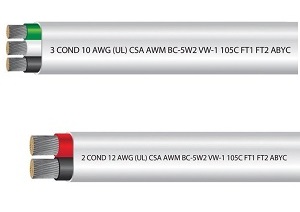

Marine Battery Cables And Terminals are up against quite a laundry list of demands even when in peaceful seas. Even when perfectly prepared and wired and not under explicit duress, the corrosive nature of salt water and salt spray wreaks havoc on wiring, and anyone who has ever spent time by the ocean knows that the salt environment is insurmountably pervasive - it will cause rust and decay, it’s just a matter of time. Go one step further and marine battery cables and terminals will have to be flexible in response to rough seas and flexing frames within boats and ships. Add to this list the other obstacles that marine battery cables will have to circumvent, such as abrasion, stretching and threading through and around tight spaces, and you will find yourself with a need for cable that is as flexible and corrosion resistant as possible while retaining the highest degree of strength and durability.

You’ll be hard-pressed to find better marine battery cables than those at EWCS Wire. The specialists at EWCS Wire have perfected the process of creating durable, reliable marine cables that possess all the qualities requisite for the highest standards of integrity. The cables at EWCS Wire are manufactured to extremely stringent specifications to best stand up the elements, resist corrosion and deliver high-quality performance. All made in the United States to guarantee fidelity their standards and quality control, many of the marine cables from EWCS are UL and USCG approved. They are tin coated to help protect the copper from undue deterioration and corrosion, and just as importantly are highly flexible. Their high degree of flexibility helps the wires continue to perform though they may have to be wound around tight corners and into close spaces, as well as moving with the ship. As salt and spray are not the only deleterious influences at sea, the marine cables at EWCS Wire also maintain a high level of resistance to acids and bases, but also to gasoline, oil and abrasion. You’ll need tough and dependable cables for any marine environments, and the products at EWCS Wire are designed to deliver, so find what you need at EWCSWire.com.

Comments

Popular posts from this blog

Two Important Things You Need to Know About Marine Electrical Wire

Do you own a boat? Are you a member of a ship’s crew? Are you a ship’s mechanic or an electrician by trade? If you answer yes to any of these questions, you will at some point or other come across marine electrical wire in the course of your career. Something important you’ll need to keep in mind is that marine electrical cable and wire is not the same as standard building wire; nor is it the same as automotive battery wire. Here are the two big defining traits. Marine Electrical Wire Is Highly Flexible If there’s one thing you need to know about marine electrical wire (also sometimes called marine battery cable or marine battery wire) it’s that it’s highly flexible. This is accomplished by making these conductors out of very high strand counts of very thin conductors. Typically, marine battery wire conductors are made from pure, 100% copper and each conductor is very thin. Doing so makes the cable very flexible. Why is this necessary? Well, ...

Common Questions About Security and Alarm Cables, Answered

Not sure which type of security or alarm cable your facility or system needs? Hopefully, these answers to common questions can help! What cable is used for alarm systems? Security and alarm systems are usually wired with small-gauge wire specifically designed for the purpose. For instance, many security systems are wired with 12 and 18 AWG gauge alarm wire, as these low-voltage applications do not necessarily require larger, heavier wires. However, larger or wire gauges may be required depending on the circumstances. Also, there are some unique requirements for some systems. For instance, fire alarm cables must be made with specific insulation that is heat resistant and which does not produce toxic smoke when burned. What gauge cable do you need for alarm systems? Only your specific system requirements can answer that question, but often large wire gauges (that is, smaller wires) are used as security and alarm cables because of the low-voltage, low-current application. What is ...

Why It's so Important to Use Marine Electrical Wire

When it comes to safety and performance on the water, the quality of the electrical wiring on your boat is essential. Marine electrical wire is designed to withstand the harsh conditions of the marine environment, making it the ideal choice for boats of all sizes and types. The wire that we use in our homes and for other land-based applications is designed to be tough and durable, but marine conditions introduce a lot of new variables. From near constant motion on the water to the corrosive effects of saltwater, marine cables have to handle a lot of strain. For those who are unfamiliar with marine electrical wiring, it is a specialized type of wire specifically designed to be used in boats and other marine vessels. This type of wiring is made from special materials and components that are designed to resist corrosion and withstand the harsh conditions that are common on the water. This includes saltwater, high humidity, extreme temperatures, and more. When it comes to electrical w...