
Get Your Next Flexible Welding Cable From EWCS Wire

In your search for a Flexible Welding Cable for your welding jobs, there are a lot of factors that you need to consider in order to make an informed decision. It does require a bit of calculation to ensure that you have the right length of welding cable for whichever application you intend to put the product to, and it’s important to have the proper gauge and material for the task. Here’s the good news - when you’re confident you know what you need in a flexible welding cable when you choose to source your products from EWCS Wire, your satisfaction is guaranteed.
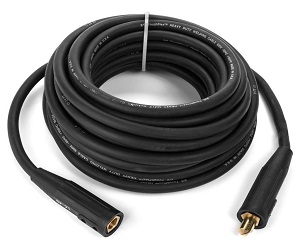

One of the most important factors to attend to closely is the length of the cable you’ll be needing. It’s important to be well aware of your work area or job site as well as with the other equipment you’ll be using so that you can determine the length of flexible welding cable you need. This is particularly important given that the gauge and material of the welding cable you use will affect its flexibility. In this arena, EWCS Wire comes prepared with multiple options in various gauges that you will need to complete your jobs.

Come to EWCS Wire and you will find flexible welding cables in gauges from 2 to 4/0 in black and red in case you need to keep two similar cables in terms of length and gauge but with different voltage ratings. Among the most flexible of the welding cables at EWCS Wire are their 2/0 Flexible 100-foot welding cables with a 600-volt rating and male and female LENCO connectors already installed on the cable. They are sunlight and water-resistant, two beneficial if not critical components in a welding cable that’s sure to be put to the grindstone when on the job. It is composed of 30 gauge copper strands that offer superb flexibility - perfect for situations where you need extra play in the wire. EWCS Wire also offers a portfolio of flexible welding cables from 2 to 4/0 gauge that is rated to withstand temperatures from -50C to 105C and can handle 600 volts. Their extremely durable insulation keeps them reliable under tough conditions, even giving them a measure of resistance to oil and gasoline.

But here’s the best thing about sourcing your flexible welding cables from EWCS Wire. There’s no need for you to guess on what you’re buying anymore because EWCS Wire offers some of the best customer service around. In fact, they want to hear your questions and concerns before purchasing - simply call up their team at 800-262-1598 or email them at sales@ewcswire.com and see what their pros can do for you. You can even head to their website at EWCSWire.com and chat with them right there. They also guarantee their orders and product to satisfy - they are serious about what they do, so when you need to get some answers for your questions, don’t settle for second best, visit EWCSWire.com and find the flexible welding cable you need.

Comments

Popular posts from this blog

Common Questions About Security and Alarm Cables, Answered

Not sure which type of security or alarm cable your facility or system needs? Hopefully, these answers to common questions can help! What cable is used for alarm systems? Security and alarm systems are usually wired with small-gauge wire specifically designed for the purpose. For instance, many security systems are wired with 12 and 18 AWG gauge alarm wire, as these low-voltage applications do not necessarily require larger, heavier wires. However, larger or wire gauges may be required depending on the circumstances. Also, there are some unique requirements for some systems. For instance, fire alarm cables must be made with specific insulation that is heat resistant and which does not produce toxic smoke when burned. What gauge cable do you need for alarm systems? Only your specific system requirements can answer that question, but often large wire gauges (that is, smaller wires) are used as security and alarm cables because of the low-voltage, low-current application. What is ...

Wire Voltage Ratings, Explained

Voltage rating is one of the most basic, fundamental ratings associated with electrical wire and cable, given in volts. Voltage itself is a measurement of electrical potential, calculated by multiplying a given electrical current (in amperes, I), by the resistance of a conductor, (in ohms, Ω). The material of the conductor, as well as the thickness, will all impact resistance. These things, being variables from which voltage is drawn, affect voltage rating. Think of voltage as the force “pushing” the electricity through a wire or cable, similar to how plumbing pipes experience line pressure, except that line pressure is measured in PSI instead of volts. Just like with water pipes, it is essential never to exceed the voltage rating of a given conductor - but instead of a burst pipe, exceeding the voltage rating of an electrical conductor can cause overheating, fires, and an elevated risk of dangerous electrical shock. But what exactly is a wire’s voltage rating? ...

Buying Quality Marine Electrical Wire

When it comes to wiring in marine environments, you have to start with a new set of rules. The American Boat and Yacht Council (ABYC) has its own set of guidelines that differ significantly from wiring in terrestrial applications. Before you start your next marine wiring project, it’s important to reference these guidelines to ensure you are using the proper marine electrical wire and proper terminal connections to avoid the possibility of potentially catastrophic electrical failure. Knowing what to look for before you purchase your wire can help ensure that your boat is wired safely. Marine environments have to deal with a lot of movement. Between the gentle rocking that experienced in your dock or harbor to the violent jarring when cutting through the waves, boats almost never standstill. Because of all this movement, it’s crucial to have flexible cables that can move without cracking their insulation or coming disconnected. In order to achieve this level of flexibility, marin...