
Quality Tray Cable For Industrial Applications

If you are a contractor wiring a building, or any other industrial wiring job, you need quality Tray Cable. Tray cables are uniquely designed to be extremely versatile, with several applications including power control, distribution, and communication. When you’re providing power to a structure or you just need a cable that can work under tough conditions, the Electric Wire and Cable Specialists(EWCS) have the heavy-duty cables you need to get the job done.
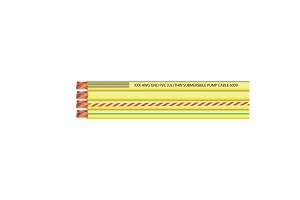

Cable trays are used in industrial applications to support wiring systems. These trays are an amazing option for organizing cables, especially in systems that might need to be rewired in the future. Tray cables can also be used in cable raceways. These systems involve enclosed conduits that hold the electrical cables you need while keeping them out of view. Typically after wiring cable trays, raceways will be employed between the cable tray and the termination point of the line.

Another distinct aspect of tray cables is the fact that they can serve more than just indoor applications. The tray cables offered from EWCS feature chemically cross-linked polyethylene insulation to protect from moisture and heat, as well as a tough PVC sheath to make the cable sunlight resistant and provide extra protection. This makes our cables perfect for outdoor installation, including burying.

We offer our tray cables in several configurations to meet any needs. We sell cables rated for both 300v and 600v depending on your needs. As far as conductors, we offer 600 volt cables with up to 50 conductors and 300 volt cables with up to 12 shielded pairs of conductors.

At EWCS, no matter what wire and cable you order, you know you will receive only top of the line products. All of our wires and cables are made in the US from high-grade copper and rugged insulation and can be ordered in convenient lengths, or the custom lengths that your business needs. Every cable and wire we offer has been listed by either UL or ETL nation testing laboratories to ensure they are up to code.

We also pride ourselves in our ability to ship out all orders as quickly as possible. We know that waiting around for supplies can hurt your business, so we aim to ship every order within one business day. We have several convenient fulfillment centers across the country, so we can typically ship products from a location near you. We aim for every order to be received by our clients within 2 to 3 days time, so you can get back to work as soon as possible.

Whatever your wiring needs, you can turn to EWCS. Whether you need welding cable, marine wire, or tray cables, we have a wide range of products all at direct from manufacturer pricing. Don’t overpay for the quality cable you need, visit EWCS and get the supplies your business requires delivered quickly at a great price.

Comments

Popular posts from this blog

Common Questions About Security and Alarm Cables, Answered

Not sure which type of security or alarm cable your facility or system needs? Hopefully, these answers to common questions can help! What cable is used for alarm systems? Security and alarm systems are usually wired with small-gauge wire specifically designed for the purpose. For instance, many security systems are wired with 12 and 18 AWG gauge alarm wire, as these low-voltage applications do not necessarily require larger, heavier wires. However, larger or wire gauges may be required depending on the circumstances. Also, there are some unique requirements for some systems. For instance, fire alarm cables must be made with specific insulation that is heat resistant and which does not produce toxic smoke when burned. What gauge cable do you need for alarm systems? Only your specific system requirements can answer that question, but often large wire gauges (that is, smaller wires) are used as security and alarm cables because of the low-voltage, low-current application. What is ...

Wire Voltage Ratings, Explained

Voltage rating is one of the most basic, fundamental ratings associated with electrical wire and cable, given in volts. Voltage itself is a measurement of electrical potential, calculated by multiplying a given electrical current (in amperes, I), by the resistance of a conductor, (in ohms, Ω). The material of the conductor, as well as the thickness, will all impact resistance. These things, being variables from which voltage is drawn, affect voltage rating. Think of voltage as the force “pushing” the electricity through a wire or cable, similar to how plumbing pipes experience line pressure, except that line pressure is measured in PSI instead of volts. Just like with water pipes, it is essential never to exceed the voltage rating of a given conductor - but instead of a burst pipe, exceeding the voltage rating of an electrical conductor can cause overheating, fires, and an elevated risk of dangerous electrical shock. But what exactly is a wire’s voltage rating? ...

Marine Battery & Cable Maintenance

Your boat’s battery is necessary to start the engine, power the electrical system, including lights and navigation, and much more. For boats powered by a trolling motor, it i the only power source for the vessel. Without it, you would be dead in the water. With that said, here are some high-level ways to take care of your marine battery and cables. Protect and Clean the Terminals The easiest aspect of marine battery maintenance is to keep the terminals clean. Over time, discharge will exude from the terminals, and this corrosion can damage the battery and make it difficult to establish a solid electrical connection. Use a solution of warm water and baking soda with a battery terminal brush or a steel wire brush to scrub them clean from time to time. Then, apply some dielectric grease to the terminals. A thin coating will help prevent water ingress and almost entirely prevent corrosion. Keep the Battery Charged A fully charged battery will last longer than one that is fully...