
What You Can Expect From The Marine Battery Cables and Terminals From EWCS Wire

The ocean and marine environments, in general, are some of the most unforgiving, reactive, corrosive, and generally dangerous environments out there. The ocean was volatile and unforgiving enough long before steel hulls and copper electrical wiring in the days of wood, sail, and storms. Though some hazards remain, many new ones have arisen. That’s why it is of the utmost importance to take the proper care to invest in the highest quality materials available when working on marine wiring to ensure not only the success of an endeavor but to ensure safety for those in that environment and onboard and vessels. Salt air, water and changing levels of humidity and temperature will make impressively short work of copper wiring and any exposed steel. It’s simply an environment that changes rapidly and dispatches obstacles with startling facility.
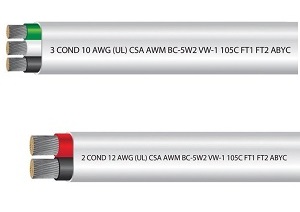

Marine Battery Cables And Terminals are up against quite a laundry list of demands even when in peaceful seas. Even when perfectly prepared and wired and not under explicit duress, the corrosive nature of salt water and salt spray wreaks havoc on wiring, and anyone who has ever spent time by the ocean knows that the salt environment is insurmountably pervasive - it will cause rust and decay, it’s just a matter of time. Go one step further and marine battery cables and terminals will have to be flexible in response to rough seas and flexing frames within boats and ships. Add to this list the other obstacles that marine battery cables will have to circumvent, such as abrasion, stretching and threading through and around tight spaces, and you will find yourself with a need for cable that is as flexible and corrosion resistant as possible while retaining the highest degree of strength and durability.

You’ll be hard-pressed to find better marine battery cables than those at EWCS Wire. The specialists at EWCS Wire have perfected the process of creating durable, reliable marine cables that possess all the qualities requisite for the highest standards of integrity. The cables at EWCS Wire are manufactured to extremely stringent specifications to best stand up the elements, resist corrosion and deliver high-quality performance. All made in the United States to guarantee fidelity their standards and quality control, many of the marine cables from EWCS are UL and USCG approved. They are tin coated to help protect the copper from undue deterioration and corrosion, and just as importantly are highly flexible. Their high degree of flexibility helps the wires continue to perform though they may have to be wound around tight corners and into close spaces, as well as moving with the ship. As salt and spray are not the only deleterious influences at sea, the marine cables at EWCS Wire also maintain a high level of resistance to acids and bases, but also to gasoline, oil and abrasion. You’ll need tough and dependable cables for any marine environments, and the products at EWCS Wire are designed to deliver, so find what you need at EWCSWire.com.

Comments

Popular posts from this blog

Common Questions About Security and Alarm Cables, Answered

Not sure which type of security or alarm cable your facility or system needs? Hopefully, these answers to common questions can help! What cable is used for alarm systems? Security and alarm systems are usually wired with small-gauge wire specifically designed for the purpose. For instance, many security systems are wired with 12 and 18 AWG gauge alarm wire, as these low-voltage applications do not necessarily require larger, heavier wires. However, larger or wire gauges may be required depending on the circumstances. Also, there are some unique requirements for some systems. For instance, fire alarm cables must be made with specific insulation that is heat resistant and which does not produce toxic smoke when burned. What gauge cable do you need for alarm systems? Only your specific system requirements can answer that question, but often large wire gauges (that is, smaller wires) are used as security and alarm cables because of the low-voltage, low-current application. What is ...

Buying Quality Marine Electrical Wire

When it comes to wiring in marine environments, you have to start with a new set of rules. The American Boat and Yacht Council (ABYC) has its own set of guidelines that differ significantly from wiring in terrestrial applications. Before you start your next marine wiring project, it’s important to reference these guidelines to ensure you are using the proper marine electrical wire and proper terminal connections to avoid the possibility of potentially catastrophic electrical failure. Knowing what to look for before you purchase your wire can help ensure that your boat is wired safely. Marine environments have to deal with a lot of movement. Between the gentle rocking that experienced in your dock or harbor to the violent jarring when cutting through the waves, boats almost never standstill. Because of all this movement, it’s crucial to have flexible cables that can move without cracking their insulation or coming disconnected. In order to achieve this level of flexibility, marin...

Factors to Look Out for When Selecting a Boat Battery Cable

Whether you’re an experienced boater or just getting started, it’s important to make sure your boat is properly outfitted with the right battery cables. Boat batteries provide power to the many electrical components of your boat, and the battery cables are responsible for transferring that power safely and efficiently. Selecting the right cables is essential to making sure your boat runs smoothly and that you’re able to enjoy your time on the water. When selecting boat battery cables , there are a few key characteristics to look for. High-Quality and Marine Grade First, you’ll want to look for cables that are made from high-quality materials that can withstand the elements. The cables should be able to handle the rigors of a marine environment, including exposure to saltwater, UV rays, and extreme temperatures. Additionally, you’ll want to make sure the cables are flexible and easy to install, as this will make the job of connecting the cables to your ba...