
Traits that Make for Quality Battery Cable Wire

When you year the term battery cable wire, you’re probably working with battery cable, since wire is a single conductor and cable is made up of many small conductors braided together. Most so called battery wire is actually battery cable for one (or more) of the reasons that will be covered below.
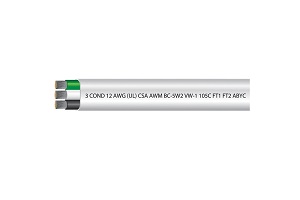
If you’re looking for battery cable (wire), it probably means you have a problem with your battery or electrical connections. This could be a problem with the wire but it could also be a problem with the battery or the connection. Test the battery’s health using a multimeter and if the reading indicates low voltage, you may want to try charging the battery. If the battery will not hold a charge, it may be time to replace the battery itself. That is to say, your wire or cable may not be the culprit.

In that case, check the battery terminals and the connections. Corrosion may also cause issues with power; if there is corrosion on the terminals, you may want to try cleaning it with a terminal cleaner. If the issue persists, you may need new cable.

There are several types of cable that can be used for battery cables, including but not limited to cables actually termed as “battery cables.” For example, some welding cables can be used for battery power supply hookups.

If you’re looking for battery cables to replace aging electrical infrastructure or simply to hook up a new battery, here are some things to look for.

  • Cable Gauge and Voltage Rating - Perhaps the most important thing to assure yourself of is that you are working within the limits of the cable or wire you choose. You can use a wire gauge chart or simply make sure you do not exceed the voltage rating of the battery cable. Working within the constraints of your equipment is not only a matter of efficiency but also of safety.


  • Flexibility - Some battery cables, specifically marine grade battery cables, are specifically manufactured with a higher strand count to ensure the best degree of flexibility possible. This makes the cable better able to withstand some mechanical stressors and also makes it possible to bend the cables into place to make connections.


  • Durable Insulation - Many battery cables are made with EPDM, XLPE or other heavy-duty, high-durability materials as part of their jacketed insulation. All things being equal, the toughest insulation you can find is also the best. Many of them are resistant to sunlight and ozone, weather, extreme temperatures, moisture, gasoline, oil, acids, alkali and even abrasion influences.

If you have more targeted questions about what makes quality in battery cable, get on the phone with the Electrical Wire and Cable Specialists from EWCSWire.com. They’re never more than a call away at 800-262-1598 and would be more than happy to answer your questions, although they can also provide you with some of the highest quality, made-in-the-USA electrical wires and cables (including battery cable) out there. Give them a call today to learn more.

Comments

Popular posts from this blog

Common Questions About Security and Alarm Cables, Answered

Not sure which type of security or alarm cable your facility or system needs? Hopefully, these answers to common questions can help! What cable is used for alarm systems? Security and alarm systems are usually wired with small-gauge wire specifically designed for the purpose. For instance, many security systems are wired with 12 and 18 AWG gauge alarm wire, as these low-voltage applications do not necessarily require larger, heavier wires. However, larger or wire gauges may be required depending on the circumstances. Also, there are some unique requirements for some systems. For instance, fire alarm cables must be made with specific insulation that is heat resistant and which does not produce toxic smoke when burned. What gauge cable do you need for alarm systems? Only your specific system requirements can answer that question, but often large wire gauges (that is, smaller wires) are used as security and alarm cables because of the low-voltage, low-current application. What is ...

Two Important Things You Need to Know About Marine Electrical Wire

Do you own a boat? Are you a member of a ship’s crew? Are you a ship’s mechanic or an electrician by trade? If you answer yes to any of these questions, you will at some point or other come across marine electrical wire in the course of your career. Something important you’ll need to keep in mind is that marine electrical cable and wire is not the same as standard building wire; nor is it the same as automotive battery wire. Here are the two big defining traits. Marine Electrical Wire Is Highly Flexible If there’s one thing you need to know about marine electrical wire (also sometimes called marine battery cable or marine battery wire) it’s that it’s highly flexible. This is accomplished by making these conductors out of very high strand counts of very thin conductors. Typically, marine battery wire conductors are made from pure, 100% copper and each conductor is very thin. Doing so makes the cable very flexible. Why is this necessary? Well, ...

A Guide to Choosing Electric Wire Cable

If there’s one thing that’s sure in the world of electrical supplies, it’s that you’ll always find yourself out of supplies just when you thought you had enough for a current job. With the diversity to be found in the shape, structure, and styling of residential, commercial, and industrial building plans, you can never fully know exactly what you’ll need before you get your hands on-site. With that in mind, there are some steps you can take when stocking up that will help ensure you’re the most prepared you can be. This guide will help you stock up on electric wire cable before every job, so you can get to work stress-free. Step One: Get Colorful No job will go smoothly if you can’t tell your wires apart from one another. Not only will uniformly colored electric wire cable make the job at hand more difficult, but it will also make future repairs considerably more difficult. Make sure you plan to have multiple colors of cable on hand before every job. You’ll thank yourself when y...